


T-slot ground rail
Other Products


The contribution of T-slot ground rails to the machining industry is evident to all.
The lower the solidification rate of T-slot ground rails, the more beneficial it is for solidification according to the iron-graphite 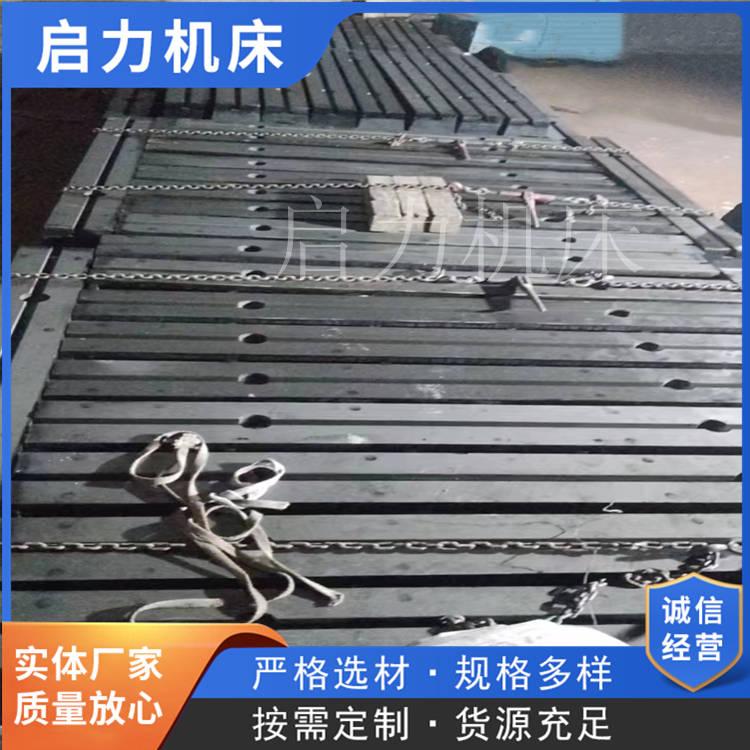 stabilization system, and it can promote the formation of Type A graphite structure. The role of T-slot ground rail treatment lies in the fact that the mechanical properties of gray cast iron largely depend on its microstructure. Untreated T-slot ground rails have an unstable microstructure, poor mechanical properties, and are prone to chill formation in thin-walled sections. To ensure consistent casting quality, inoculation treatment is essential. The inoculant used for T-slot ground rail treatment is added in very small amounts, which has minimal impact on the chemical composition of the cast iron but significantly affects its microstructure, thereby improving the mechanical properties of gray cast iron and also having a noticeable impact on its physical properties.
The roughness of the inner and outer surfaces of the mold should be strictly controlled, and polishing should be performed when necessary. The surface roughness of the T-slot ground rail wax pattern is a key factor affecting the surface roughness of the castings. The process parameters for pressing the T-slot ground rail wax pattern greatly influence its surface roughness. For example, insufficient stirring of the molding material, uneven mixing of its components, uneven temperature of the molding material, low temperature of the wax material and mold, low injection pressure, and short holding time can all result in high surface roughness of the wax pattern.
Moving on to the shell-making process for T-slot ground rails: During coating application, it is often observed that castings deform after surface impacts. The main reasons are careless handling during operation, such as the pattern group being too close to the coating bucket wall or pattern groups placed too close to each other, which can cause collisions and lead to wax pattern deformation, ultimately resulting in T-slot ground rail deformation. Additionally, the design thickness of the mold shell can also affect casting deformation. For instance, mold shell expansion causing casting dimensions to deviate from the drawing is another form of casting deformation. Further, in the melting process: Mold shell sintering can also cause T-slot ground rail deformation. Improper placement or stacking of mold shells during sintering may lead to mold shell deformation, resulting in casting deformation. The design of the gating system, pouring temperature, and cooling method of the castings can all contribute to casting deformation.
The working surface of T-slot ground rails should not have rust, scratches, impact marks, or other appearance issues that affect usability. The working surface of T-slot ground rails should not have casting defects such as sand holes, gas pores, cracks, slag inclusions, or shrinkage porosity. All casting surfaces should be free of molding sand, with a smooth surface and firmly applied paint, and all edges should be deburred. On the opposite sides of the T-slot ground rail, there should be provisions for installing handles or lifting points, such as threaded holes or cylindrical holes. When designing lifting points for T-slot ground rails, consideration should be given to minimizing deformation caused by lifting.
The influence of workpiece material and surface quality on T-slot ground rails. For example, when the workpiece is cast iron, wear is greater; when the workpiece is made of soft metals like copper or aluminum, wear is less; workpieces with rough surfaces can easily scratch the measuring surface of T-slot ground rails. Incorrect use of cast iron platforms, such as measuring rotating workpieces with T-slot ground rails, can cause rapid wear. The above factors leading to loss of accuracy in cast iron platforms should not be feared when encountered during operation; instead, they must be addressed to ensure the proper use of T-slot ground rails in production.
Reasonable molding process specifications should be established and strictly followed. The surface roughness of the T-slot ground rail mold shell is a critical factor affecting the surface roughness of the castings. The surface roughness of the mold shell is related to the following factors: The wax pattern surface should be cleaned thoroughly to remove oil and other contaminants, which improves the coating adhesion of the wax pattern; 2.3.2 For silica sol coatings, an appropriate amount of wetting agent (surface agent) should be added to ensure the coating is evenly applied to the wax pattern surface; at the same time, a defoaming agent should be added to prevent excessive gas in the coating.
Qili Machine Tool, Ms. Xie, 13785751790
| Industry Category | Others |
|---|---|
| Product Category | |
| Brand: | 泊头启力机床 |
| Spec: | 2000*5000 |
| Manufacturer: | 泊头启力机床 |
| Origin: | 111309 |


